

This Month at a Glance
- HRSA rebate model pilot moves toward implementation. HRSA announced a revised 340B Rebate Model Pilot Program, with manufacturer rebate plans due August 24 and approved plans expected to take effect January 1, 2027.
- Federal 340B reform activity accelerates. SECURE and SUSTAIN offer different approaches to rebates, patient definition, contract pharmacy, transparency, and duplicate discounts.
- Claims data becomes central to 340B operations. Claims data is increasingly tied to manufacturer requirements, rebate model planning, medical claims, duplicate discount prevention, and federal reform, making data tracking a core program management issue.
- Illinois enacts 340B protection law. Illinois signed HB 2371 into law, adding new state-level protections for covered entities and contract pharmacies.
- 340B change is becoming harder to operationalize. Internal teams must turn constant policy movement into workflows, documentation, vendor oversight, and leadership communication.
HRSA Rebate Model Pilot Moves Toward 2027 Implementation
HRSA has announced a revised 340B Rebate Model Pilot Program, moving the rebate model debate from a policy question back toward potential implementation. The update is significant because the original rebate pilot was blocked before implementation, and covered entities continue to raise concerns about cash flow, administrative burden, data submission requirements, and the downstream impact on patient services.
What HRSA Announced
HRSA’s revised pilot would allow participating manufacturers to submit rebate plans for agency approval. If approved, those manufacturers could effectuate the 340B ceiling price through a rebate process rather than providing the discount at the time of purchase.
Key details include:
- Manufacturer rebate plans are due to HRSA by August 24, 2026.
- Approved plans would take effect January 1, 2027.
- The pilot is limited to a selected group of drugs.
- Covered entities would submit data after dispensing to request rebates.
- Manufacturers would validate claims before issuing rebate payments.
HRSA describes the pilot as a way to improve transaction-level transparency, support program oversight, and coordinate with the Medicare Drug Price Negotiation Program.
Why Covered Entities are Concered
The concern is not just whether a rebate model is legally permissible, but how it would work in practice. A rebate structure requires CEs to purchase drugs before receiving the 340B discount value, submit pharmacy or medical claims data after dispensing, wait for manufacturer validation, track denials or delays, and reconcile rebate payments back to purchasing and dispensing activity. That is a major operational shift from the upfront discount model many covered entities rely on for cash flow and program stability.
Claims Data Remains at the Center
The rebate model also overlaps with the broader manufacturer claims data trend already affecting covered entities. Internal teams may need to know where required data lives, who validates it, how quickly it can be submitted, and how denials or delays would be resolved.
This could be especially difficult for smaller or rural covered entities with limited staff, fragmented systems, or fewer internal reporting resources.
What This Means for CEs
Covered entities should begin preparing now, even though final operational details may continue to develop. Internal teams should identify potential exposure to affected drugs, review purchasing and replenishment workflows, evaluate cash flow impact, and determine whether current systems or vendors could support rebate submission and reconciliation. The revised pilot may be limited, but it signals that rebate models remain an active federal priority and could become a major operational issue beginning in 2027.
Federal Register Notice: Covered entities reviewing the notice may want to focus on pages 48883–48884 for timeline and scope, 48891–48892 for operational and administrative concerns, 48896–48897 for claims-data discussion, and 48902–48903 for pilot requirements, reporting timelines, rebate timing, and required data fields.
SECURE vs. SUSTAIN: Two Paths for Federal Reform
Federal 340B reform activity accelerated this summer with two major bipartisan proposals: the House SECURE 340B Act and the Senate SUSTAIN 340B Act. Both bills address several of the same pressure points, including patient definition, contract pharmacy access, rebate models, transparency, and duplicate discount prevention.
For covered entities, the key issue is not just that Congress is talking about 340B reform. It is that the proposals being introduced could directly affect day-to-day program operations, documentation, vendor workflows, and the savings used to support patient care.
Where the Bills Overlap
SECURE and SUSTAIN are different proposals, but they focus on many of the same pressure points. Both address:
- Patient definition
- Contract pharmacy access
- Rebate models
- Transparency and reporting
- Duplicate discount prevention
- Program integrity
The overlap matters because these are the issues most likely to remain central to any future federal reform package. Even if neither bill advances exactly as written, covered entities should expect continued congressional attention on who qualifies as a 340B patient, how contract pharmacies are used, how savings are reported, and what documentation will be expected.
Rebate Models
One of the biggest differences is how each proposal approaches rebate models.
The SECURE 340B Act would pause manufacturer rebate models for four years while new standards around patient definition, contract pharmacy, data sharing, and transparency are established. Supporters frame this as a way to create stability before moving toward any major shift in how 340B discounts are effectuated.
The SUSTAIN 340B Act takes a different approach by reinforcing the point-of-purchase discount structure and requiring transition away from any 340B Rebate Model Pilot Program toward a clearinghouse framework established under the legislation. That distinction matters because HRSA is also moving forward with a revised rebate model pilot, making rebate policy one of the most active areas of federal 340B debate.
For covered entities, both bills signal concern about rebate models, but neither eliminates the need to prepare.
Patient Definition
Both bills address patient definition, which has become one of the most contested areas of the 340B program. Patient definition affects whether prescriptions qualify for 340B pricing, how contract pharmacy claims are captured, how referral-based prescriptions are supported, and how covered entities defend eligibility during audits.
For internal teams, even small differences in statutory language could have major operational consequences. Covered entities should pay close attention to how each proposal defines the relationship between the patient and covered entity, addresses provider and referral requirements, treats eligible sites of care, handles prescriptions written outside the covered entity, and sets documentation expectations.
This issue is especially important because patient definition is also being challenged through litigation. Federal reform could either clarify the standard or create new operational requirements that would need to be built into policies, TPA logic, and audit documentation.
Contract Pharmacy
Contract pharmacy is another major area of overlap. Both bills recognize that contract pharmacy access is central to the modern 340B program, but the operational details will matter.
SUSTAIN would codify covered entity use of contract pharmacies and, according to Senate materials, does not place numeric or geographic limits on those arrangements. However, it would add requirements tied to registration, contracts, audits, and program integrity. SECURE also addresses contract pharmacy standards as part of its broader reform framework.
For covered entities, the key question is not only whether contract pharmacy access is preserved, but what conditions come with that access. New standards could affect contract pharmacy agreements, covered entity oversight, TPA setup, pharmacy registration, audit rights, and ongoing documentation.
Transparency, Reporting, and Duplicate Discounts
Both proposals reflect congressional interest in transparency and duplicate discount prevention. These areas are often framed as program integrity measures, but for covered entities they can create significant administrative work around how 340B savings are reported, how Medicaid duplicate discounts are prevented, how contract pharmacy arrangements are documented, how data requests are handled, and how internal policies support program integrity.
Reporting requirements may sound straightforward in legislation, but in practice they often require coordination across pharmacy, finance, compliance, billing, IT, legal, and leadership.
Broader Federal Reform Activity
SECURE and SUSTAIN are not the only federal 340B proposals in the current landscape. Other proposals, including the 340B ACCESS Act and the 340B for Patients Act discussion draft, remain part of the broader debate over patient affordability, transparency, contract pharmacy, manufacturer restrictions, and program oversight. The ACCESS Act has been framed as a major reform proposal with patient discount and contract pharmacy requirements, while the 340B for Patients Act discussion draft is also seeking stakeholder feedback on broader program integrity and affordability reforms.
The number of proposals matters. Congress is not looking at 340B through one narrow issue anymore. Rebate models, patient definition, contract pharmacy, reporting, and duplicate discount prevention are all being debated at the same time.
What CEs Should Do Next
Covered entities should monitor both bills closely without treating either as settled policy. Internal teams should track patient definition language, contract pharmacy protections, rebate provisions, child site requirements, transparency obligations, duplicate discount standards, and any clearinghouse or data submission framework. The key is understanding how reform could affect daily operations, documentation, vendor workflows, audit readiness, and patient care resources.
Claims Data Becomes the Operational Center of 340B
When Congress created 340B in 1992, the program had a straightforward purpose: helping eligible safety-net providers stretch limited resources through discounted outpatient drugs. More than three decades later, that mission remains important, but the operational environment has become far more complex. Claims data now sits at the center of manufacturer restrictions, in-house pharmacy requirements, medical claims, rebate model planning, duplicate discount prevention, and federal reform.
For covered entities, this means claims data is no longer just a vendor or TPA issue. It is becoming part of how pricing access is maintained, rebates may be requested, compliance decisions are supported, and responses to manufacturer, state, and federal requirements are managed.
More Than Manufacturer Reporting
Manufacturer claims data requirements continue expanding across contract pharmacy and in-house pharmacy settings, with some policies now reaching medical claims data. At the same time, HRSA’s revised rebate model pilot would rely on post-dispense data submission so manufacturers could validate eligible claims before issuing rebate payments.
That overlap matters. Claims data is becoming the common thread between manufacturer policy, federal rebate planning, duplicate discount prevention, and congressional reform. For CEs, the question is not only whether data can be submitted, but whether the organization has a clear process for knowing what is being requested, where the data lives, who validates it, and what is at risk if submission is delayed, denied, or disputed.
Data Lives Across Multiple Systems
In practice, requested data is rarely housed in one place. Pharmacy claims, medical claims, prescriber information, payer details, encounter support, TPA records, split-billing data, and contract pharmacy reporting may all live in different systems.
For internal teams, that creates challenges around data validation, submission ownership, outcome tracking, and documentation. This is especially difficult for smaller hospitals and rural covered entities that may not have dedicated 340B staff, data analysts, or IT resources focused only on 340B.
Pricing, Rebates, and Compliance Are Converging
The biggest shift is that data submission can affect pricing access, cash flow, rebate timing, audit support, reconciliation, data governance, privacy, vendor accountability, and internal approval processes.
Covered entities should treat claims data as a core 340B program management function. Internal teams should track manufacturer requirements, rebate developments, vendor responsibilities, state exemptions, submission timelines, enforcement risk, and where key data lives across pharmacy, billing, EMR, TPA, split-billing, and contract pharmacy systems.
The goal is to build a repeatable process for evaluating data demands, documenting decisions, and protecting pricing access, compliance, cash flow, and patient care resources in a program environment that is becoming increasingly data-driven.
ACI has previously covered this trend in more detail, including updates on manufacturer claims data requirements and all-claims submissions for 340B purchases.
Illinois Enacts 340B Protection Law
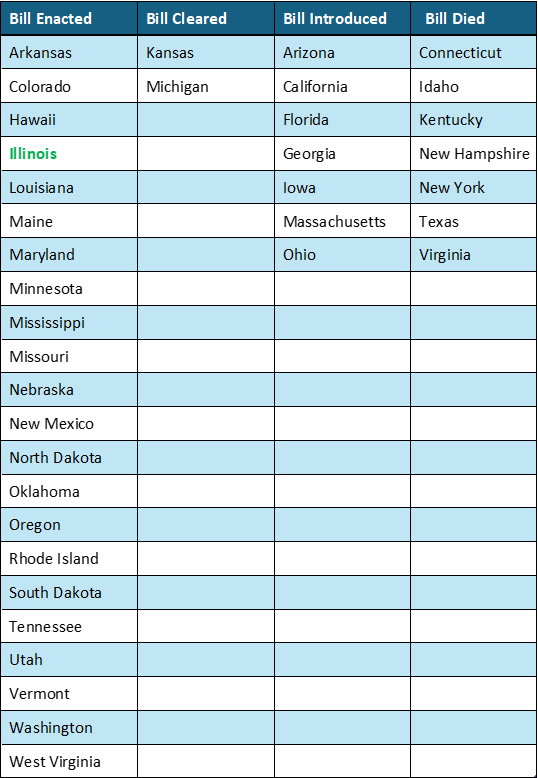
Illinois enacted HB 2371 on August 7, creating the Patient Access to Pharmacy Protection Act. The new law prohibits manufacturers from denying, restricting, conditioning, or otherwise interfering with the acquisition or delivery of 340B drugs to covered entities or their authorized contract pharmacies, unless prohibited by federal law.
This is a meaningful state-level win at a time when manufacturer restrictions, data demands, and rebate model activity continue to create uncertainty. Illinois now joins a growing group of states with enacted laws protecting 340B contract pharmacy access, with 20 states now having protections on the books. Covered entities in Illinois should review their contract pharmacy arrangements, document any manufacturer restrictions or access issues, and monitor how the law is implemented or challenged going forward. Covered entities should also continue educating local legislators on why 340B access matters for their hospitals, clinics, and patients.
Additional Resource: Illinois covered entities should review the Illinois General Assembly HB 2371 page for the full law text, implementation language, reporting provisions, and enforcement details.
Current Status on State Bills and Laws that Prohibit Drugmaker 340B Contract Pharmacy Restrictions
340B Pressure Builds: Litigation, Policy, and Daily Program Operations
Covered entities are not struggling with 340B because they are unaware of the changes happening around them. Most internal teams know the program is shifting quickly. The harder part is translating each new development into a practical decision: what needs to be tracked, what needs to be documented, who needs to be involved, and whether the change affects pricing access, compliance, savings, or patient services.
That challenge has grown significantly over the last several years. CAHs, FQHCs, SCHs, DSH hospitals, and other 340B providers are managing contract pharmacy restrictions, manufacturer data requirements, rebate model proposals, patient definition litigation, proposed Medicare Part B payment cuts, state law developments, and federal reform bills at the same time. For many covered entities, the issue is not a lack of effort. It is the volume, speed, and complexity of change.
Policy Updates Create Real Internal Work
Every new 340B development creates practical questions. Does a manufacturer policy apply? Is a state exemption available? Which products or pharmacies are affected? Does the TPA need to be updated? Is data required? Who validates it? How should leadership understand the financial impact?
These questions often fall to small teams already carrying multiple responsibilities. For rural hospitals, critical access hospitals, health centers, and lean pharmacy or compliance departments, even a small policy change can create hours of review, documentation, vendor follow-up, and internal communication.
Clear Processes Matter More Than Ever
As 340B becomes more fragmented, covered entities need a clear process for tracking policy changes, documenting decisions, reviewing contract pharmacy performance, monitoring manufacturer restrictions, and understanding how program changes affect savings and patient services.
This does not mean every covered entity needs to respond to every development in the same way. It means CEs need a reliable way to identify what applies to their organization, assign internal ownership, communicate risk, and act before a policy change becomes an operational problem.
What This Means for CEs
Covered entities should prioritize tracking, documentation, and consistency. That includes maintaining current trackers for manufacturer policies, claims data requirements, contract pharmacy restrictions, state law protections, rebate activity, federal proposals, and reimbursement changes.
The 340B landscape is becoming more fragmented, data-driven, and contested. For CEs, the goal is not only to react to each update, but to build a program management process that can absorb constant change while protecting compliance, savings, and patient access.
Navigating 340B change can be difficult, especially for teams already managing competing priorities. ACI 340B Management helps covered entities track updates, strengthen oversight, and manage the day-to-day details of their 340B program.
Need support with your 340B program? Contact ACI 340B Management today.