

THIS MONTH AT A GLANCE
- HRSA approves 10 manufacturer rebate plans for 2027. Plans covering 18 drugs have been approved for January 1 implementation, with participating manufacturers using the Beacon Rebate Model Platform.
- Rebate pilot faces new legal and legislative challenges. Hospital groups filed a federal lawsuit on October 9, while bipartisan legislation proposes delaying implementation through 2028.
- Amgen’s November 15 encounter-data deadline approaches. Manufacturer data requirements continue expanding beyond traditional claims data, while 340B ESP introduces new submission capabilities.
- HHS report renews debate over proposed Medicare payment cuts. An October 8 analysis supports CMS’s proposed reductions in Medicare reimbursement for certain 340B drugs, raising additional financial concerns for affected hospitals.
- CMS Part D 340B Repository is now live. Voluntary submissions began October 1, with the first reporting deadline scheduled for December 31, 2026.
- Rebate implementation raises hospital cash flow concerns. Moving from upfront discounts to post-purchase rebates could create new working capital demands and additional reconciliation responsibilities for covered entities.
HRSA Approves 10 Manufacturer Rebate Plans for 2027
HRSA has approved 340B Rebate Model Pilot Program plans from 10 manufacturers covering 18 drugs, with implementation scheduled for January 1, 2027. With plans now approved, covered entities have more concrete requirements to prepare for.
All 10 manufacturers have selected the Beacon Rebate Model Platform to manage rebate submissions. Although the use of one platform may simplify certain processes, manufacturer-specific plans and drug-level requirements will still need to be reviewed.
Approved Manufacturers and Selected Drugs
HRSA lists the following manufacturers and products in its approved plans for the January 1, 2027 pilot:
- AbbVie: Imbruvica, Linzess, Vraylar
- Amgen: Enbrel, Otezla, Otezla XR
- Astellas Pharma: Xtandi
- AstraZeneca: Farxiga
- Bristol Myers Squibb: Eliquis, Pomalyst
- Boehringer Ingelheim: Jardiance, Ofev, Tradjenta
- GSK: Breo Ellipta, Trelegy Ellipta
- Merck: Januvia, Janumet, Janumet XR
- Pfizer: Ibrance
- Teva: Austedo, Austedo XR
What the Approved Model Requires
Under the pilot, covered entities would purchase affected drugs at wholesale acquisition cost (WAC) rather than receiving the 340B discount upfront. Following dispensing, they would submit claims data through Beacon to request the difference between WAC and the applicable 340B ceiling price.
Purchasing: Manufacturers will load WAC pricing for affected drugs into existing 340B wholesaler accounts. Covered entities do not need to open separate WAC accounts and should continue purchasing these drugs through their existing 340B accounts to remain eligible for rebates.
- Claims submission: Claims must be submitted within 45 calendar days of dispensing.
- Rebate payments: Manufacturers have 10 calendar days to pay or deny completed rebate requests.
- Compliance: Approved data fields, rebate calculations, and dispute procedures must follow HRSA’s pilot requirements.
- Reconciliation: Covered entities will need processes for tracking submissions, denials, payments, and reconciliation.
What This Means for CEs
CEs should begin by identifying utilization of the affected drugs and reviewing the approved manufacturer plans. Pharmacy and finance teams should also assess purchasing changes, expected cash flow exposure, and how rebate reconciliation will fit into existing workflows.
Conversations with wholesalers, TPAs, and other vendors will be important to confirm which responsibilities they can support and which will remain with internal teams.
For more information on the approved manufacturer plans and implementation requirements, visit HRSA’s 340B Rebate Model Pilot Program, including its manufacturer-specific plans and FAQs.
For additional background on the revised pilot and its potential impact on covered entities, read ACI’s HRSA Revises 340B Rebate Model Pilot: What Covered Entities Need to Know.
Rebate Pilot Faces New Legal and Legislative Challenges
On October 9, the American Hospital Association (AHA), Maine Hospital Association, and four safety-net hospitals filed a federal lawsuit challenging the revised pilot. The plaintiffs also requested immediate court relief to prevent implementation. The lawsuit follows earlier litigation that blocked the original pilot, which had been scheduled to begin January 1, 2026.
Why Hospital Groups Are Challenging the Revised Pilot
In December 2025, a federal court halted the original pilot after finding that HHS had not adequately considered its financial and operational consequences for covered entities. The revised program now includes 18 drugs, compared with 10 in the original model.
Hospital groups argue that the revised pilot continues to underestimate the financial burden of replacing upfront discounts with rebates, particularly for safety-net hospitals with limited cash reserves.
According to the AHA, hospital analyses estimate the program could create more than $1 billion in annual administrative costs, including rebate submissions, reconciliation, and other operational expenses. These are estimates presented by hospital groups, not established implementation costs.
HRSA, meanwhile, maintains that the pilot is intended to improve transparency, program integrity, and duplicate discount prevention.
Congress Introduces a Two-Year Delay Proposal
The legal challenge is not the only effort that could affect implementation. The bipartisan 340B Rebate Model Delay Act (H.R. 10770) would preserve upfront 340B discounts from January 1, 2027, through December 31, 2028, and prohibit federal funding for the current rebate pilot or a substantially similar program during that period.
The bill was introduced by Representatives Rob Bresnahan (R-PA), Debbie Dingell (D-MI), Tracey Mann (R-KS), and Lois Frankel (D-FL). On October 15, the AHA announced its support for the proposal. If enacted, the legislation would create a two-year pause in federal rebate model implementation. However, the bill has not become law, and its introduction does not change HRSA’s current implementation timeline.
What This Means for CEs
Covered entities now face two parallel developments: an approved rebate model moving toward implementation and legal and legislative efforts that could alter that timeline.
For internal teams, the priority should remain preparation without assuming the outcome of either challenge. Covered entities should continue reviewing approved manufacturer plans, evaluating potential financial exposure, and coordinating with vendors while monitoring court decisions and congressional activity.
Until a court order, legislative action, or HRSA announcement changes the timeline, January 1, 2027 remains the planned implementation date.
For more information on the legal challenge and proposed legislation, readers can review the AHA’s October 9 announcement on the revised rebate pilot lawsuit and its October 15 update on the 340B Rebate Model Delay Act (H.R. 10770). Both provide additional context on the ongoing efforts to challenge or delay implementation.
Encounter Data Requirements Expand: Amgen’s November 15 Deadline
Manufacturer claims data policies continue expanding, with some requirements now extending beyond prescription and medical claims data to include information about the underlying patient encounter.
Amgen has announced that, beginning November 15, 2026, it will request standard healthcare visit and service claims data associated with 340B pharmacy and medical dispenses of Amgen products. The policy builds on Amgen’s existing claims data requirements, which began in June, and applies to all covered entity types, subject to applicable state exemptions.
340B ESP Introduces New Submission Capabilities
On October 1, 340B ESP released an updated claims submission experience, including submission summaries, validation alerts, submission receipts, and new tools for tracking claims.
The platform also introduced modules supporting pharmacy and medical claims submissions accompanied by encounter data. These tools allow covered entities to review submitted information, identify potential errors, and track submission results more easily.
Why Encounter Data Matters
Unlike traditional pharmacy claims, encounter data provides additional information about the patient visit associated with a prescription or drug administration. This may include dates of service, diagnosis and billing codes, and information used to determine whether the encounter occurred in an eligible 340B setting.
Amgen states that these additional data elements are intended to help validate qualifying 340B transactions and prevent duplicate discounts or diversion. For covered entities, however, gathering this information may require coordination across pharmacy, billing, EMR, compliance, and TPA systems.
Importantly, manufacturer encounter-data requirements are separate from HRSA’s rebate pilot. Covered entities should evaluate each request independently rather than assuming the same data requirements apply across programs.
What This Means for CEs
Covered entities potentially affected by Amgen’s policy should review the current requirements and any applicable state exemptions before November 15.
Internal teams should confirm where encounter information is stored, whether existing reports capture the necessary data fields, and which vendors or departments will be responsible for retrieving, validating, and submitting it.
As manufacturer data requirements expand, understanding what information is being requested, where it lives, and who is responsible for submission will be increasingly important for maintaining 340B pricing access and program oversight.
For more details on Amgen’s updated requirements and submission procedures, see Amgen’s 340B Policy Update and 340B ESP’s October Platform Updates.
HHS Report Renews Debate Over Proposed 340B Medicare Payment Cuts
On October 8, the Department of Health and Human Services (HHS) released a new analysis examining financial incentives within the 340B Drug Pricing Program. The report supports CMS’s proposed changes to Medicare outpatient drug reimbursement, bringing renewed attention to another potential financial challenge for covered entities in 2027.
Under the proposed Calendar Year 2027 Hospital Outpatient Prospective Payment System (OPPS) rule, CMS would reduce reimbursement for certain 340B-acquired drugs from Average Sales Price (ASP) plus 6% to ASP minus 33.4%.
What the HHS Report Found
HHS argues that the difference between discounted 340B acquisition costs and Medicare reimbursement can create financial incentives that influence hospital purchasing and treatment decisions.
The report found that inflation-adjusted Medicare payments for 340B drugs furnished by non-exempt providers increased from $7.1 billion in 2021 to $10.7 billion in 2023. HHS cited these findings in support of aligning Medicare reimbursement more closely with reported drug acquisition costs.
CMS estimates that the proposed changes would reduce Medicare drug payments by approximately $4.55 billion in 2027, while reducing beneficiary cost sharing by approximately $1.15 billion.
The proposal would be implemented in a budget-neutral manner, with corresponding increases to payments for other outpatient services. However, individual hospitals could still experience financial losses depending on their drug utilization and outpatient service mix.
Hospital Groups Raise Concerns
Hospital advocates have challenged the proposal, arguing that reduced reimbursement could limit resources available for patient care, particularly at safety-net hospitals.
The American Hospital Association (AHA) has also questioned the acquisition cost survey used to support the proposed rates and raised concerns about the cumulative financial impact of reimbursement reductions alongside other changes affecting 340B operations.
Importantly, the proposed reimbursement reduction has not been finalized.
What This Means for CEs
Hospitals paid under OPPS should monitor the final 2027 payment rule and evaluate how the proposed reimbursement changes could affect outpatient drug revenue. Finance and pharmacy leadership may want to assess exposure to separately payable 340B drugs, current Medicare reimbursement, and the potential impact on outpatient service lines.
For affected hospitals, these proposed reimbursement changes come alongside the potential shift to rebate-based 340B purchasing, creating separate financial considerations for 2027. Understanding these separate financial pressures will be important for 2027 budgeting and program planning.
For more information on the proposed Medicare reimbursement changes and their potential impact on covered entities, see the HHS analysis of 340B financial incentives and the AHA’s response to the proposed 340B payment cuts.
CMS Repository Opens: First Reporting Deadline Set for December 31
CMS opened its Medicare Part D Claims Data 340B Repository on October 1, allowing covered entities to voluntarily submit qualifying Part D 340B claims data. The first planned reporting deadline is December 31, 2026, covering claims with dates of service from January 1 through September 30, 2026. Subsequent submissions follow quarterly reporting timelines.
CMS has published a user guide, technical companion guide, and sample Excel and CSV templates to support reporting. Covered entities may submit directly or work with TPAs and other contracted partners.
For covered entities choosing to participate, the immediate priority is confirming data availability and submission responsibilities before December 31.
Participation remains voluntary under the current framework, while mandatory reporting beginning in 2027 remains a separate proposal. Covered entities should monitor CMS for any finalized requirements.
For more information on the Medicare Part D 340B Repository, including reporting requirements, submission instructions, and deadlines, see CMS’s Medicare Inflation Rebate Program resources.
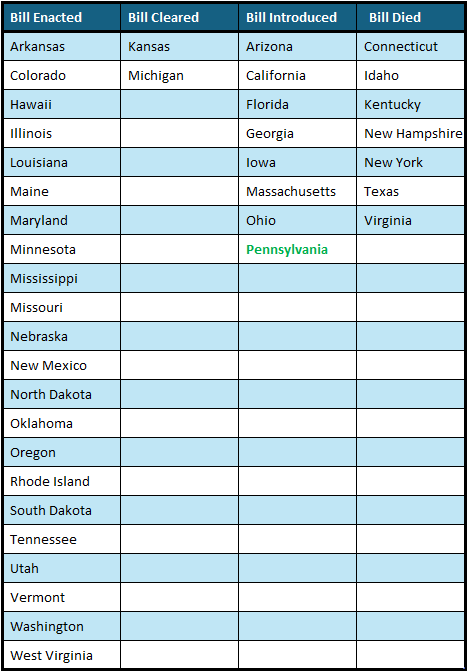
Current Status on State Bills and Laws that Prohibit Drugmaker 340B Contract Pharmacy Restrictions
*States in Bold are the newest updates since last update
What the Rebate Pilot Could Mean for Hospital Cash Flow
While much of the discussion surrounding the 340B Rebate Model Pilot has focused on implementation requirements and legal challenges, another important consideration is how the transition could affect hospital cash flow.
Under the approved pilot, covered entities would pay wholesale acquisition cost (WAC) for affected drugs and request their 340B discount value after dispensing. Even if the full rebate is eventually received, this change could require hospitals to finance significantly more drug spending upfront.
The Cost of Waiting for a Rebate
Consider a simplified example of a drug with a WAC of $10,000 and an applicable 340B price of $2,000.
Under the traditional upfront discount model, the covered entity would purchase that drug for approximately $2,000. Under the rebate model, the covered entity would initially pay $10,000 and later request an $8,000 rebate, assuming the transaction qualifies and the rebate is paid in full.
Although the final net acquisition cost could be the same, the covered entity would need to temporarily finance an additional $8,000. For hospitals purchasing multiple high-cost medications each month, the amount of capital tied up while waiting for rebates could become substantial.
Importantly, the 10-day manufacturer rebate payment window does not mean covered entities will recover their discounts within 10 days of purchasing a drug. Time between purchasing, dispensing, claims submission, and resolving incomplete or denied requests could extend the period that funds remain tied up.
The Impact Goes Beyond Cash Flow
A rebate model also introduces additional administrative responsibilities. Hospitals may need to match purchasing records to dispenses, track rebate requests, confirm payments, investigate denials, and account for outstanding rebates.
Managing these changes may require additional coordination across pharmacy, finance, billing, and vendor teams. For smaller and rural hospitals already operating with limited staff and resources, even modest increases in administrative work can have meaningful consequences.
What This Means for CEs
The 340B Program was established to help eligible safety-net providers stretch scarce federal resources and reach more eligible patients while providing more comprehensive services. The longstanding upfront discount structure has helped covered entities realize those savings at the time of purchase, without needing to finance or recover the discount afterward.
As the rebate pilot moves toward implementation, covered entities should evaluate not only their utilization of affected drugs, but also the potential impact on working capital, administrative costs, and resources available for patient care.
The concern is not simply whether covered entities will eventually receive their 340B savings, but whether additional financial and administrative burdens could reduce the resources available to fulfill the program’s original purpose.