

THIS MONTH AT A GLANCE
- CMS 340B Data Repository set to launch October 1. CMS will begin accepting voluntary Medicare Part D 340B claims data from covered entities through its new repository, with mandatory participation proposed for 2027.
- Rebate model pilot moves into the next phase. Manufacturer rebate plans were due to HRSA on August 24, with approval decisions expected by September 24 ahead of the planned January 1, 2027 launch.
- Federal 340B reform activity draws stakeholder response. Stakeholders submitted feedback on Sen. Bill Cassidy’s draft 340B reform legislation, with continued focus on rebates, contract pharmacy, patient definition, transparency, reporting, child sites, and program integrity.
- State 340B Laws Continue to Drive Manufacturer Policy Changes. Recent lawsuits, court activity, and manufacturer state exemptions show how state contract pharmacy laws are directly affecting access, claims data requirements, and compliance strategy.
- OPAIS updates take effect October 1. HRSA’s OPAIS changes create a timely reminder for covered entities to review registration, recertification, address, cost report, and child site documentation before making updates.
CMS 340B Data Repository Set to Launch October 1
CMS is set to begin accepting voluntary Medicare Part D 340B claims data from covered entities on October 1, 2026, through its new 340B data repository. The repository is tied to the Medicare Prescription Drug Inflation Rebate Program and is intended to help CMS identify 340B units for Medicare Part D claims.
The update is significant because CMS has also proposed making repository participation mandatory beginning in 2027. If finalized, participation would be required as a condition of continued Medicare enrollment for providers and suppliers that are covered entities.
What CMS Announced
CMS published materials explaining how covered entities and their TPAs can create accounts, submit claims, and follow quarterly reporting timelines. The voluntary submission period begins October 1 and applies to Part D 340B claims dating back to January 1, 2026.
CMS has stated that covered entities may submit claims directly or arrange for TPAs or other contracted partners to submit data on their behalf. The agency also noted that repository data will not be shared outside CMS, including with manufacturers or Part D plans.
Why This Matters for Covered Entities
For covered entities, the repository adds another layer to the growing 340B data environment. Even though participation is voluntary for now, the proposed 2027 requirement means internal teams may need to start identifying where Part D 340B claims data lives, who would be responsible for submission, how TPA support would work, and how quarterly reporting would be managed.
This is especially important because the repository is not happening in isolation. It is developing alongside HRSA’s rebate model pilot, manufacturer claims data requirements, and broader policy discussions around neutral clearinghouses and duplicate discount prevention.
What CEs Should Do Next
Covered entities should begin reviewing their Part D 340B claim visibility now. Internal teams should confirm whether their TPA or pharmacy partners can identify and submit the required data, determine who would own the reporting process, and monitor whether CMS finalizes mandatory participation for 2027.
Even if a covered entity does not submit data during the voluntary period, the October 1 launch is a practical opportunity to understand what CMS is asking for before the process potentially becomes required.
Want to dig into the details? CMS has published FAQs, a companion guide, submission templates, and other resources to help covered entities prepare for the new repository. Explore the CMS Medicare Part D Claims Data 340B Repository resources.
Rebate Model Watch: What’s Coming Next
HRSA’s revised 340B Rebate Model Pilot Program continues moving toward possible January 1, 2027 implementation. Manufacturer rebate plans were due to HRSA by August 24, and HRSA has said approval decisions are expected by September 24.
If plans are approved, covered entities should also be watching for required manufacturer notices. HRSA’s pilot framework requires covered entities to receive notice at least 90 days before implementation, which would place the notice date around October 3 for a January 1 start. Those notices should include key operational details such as registration requirements, platform instructions, submission procedures, and other information covered entities would need to prepare.
This month, the focus shifts from the pilot’s structure to the next operational checkpoints: HRSA approvals, manufacturer notices, and covered entity preparation.
What CEs Should Be Watching
HRSA’s revised pilot would allow approved manufacturers to provide the 340B discount through a rebate process rather than through an upfront discount for certain selected drugs. Under the model, covered entities would purchase affected drugs upfront, submit specified claims data after dispense, and wait for manufacturer validation and rebate payment.
Key items covered entities should watch include:
• Which manufacturers receive approval
• Which drugs are included
• What technology platforms are used
• What data fields are required
• How quickly rebates must be paid
• How denials or disputes are handled
• Whether TPAs or vendors can support submission and reconciliation
Why This Matters Operationally
Provider groups continue to raise concerns that rebate models could create administrative and financial burden, while manufacturers have argued that rebates would improve transparency and program integrity.
For covered entities, the operational concern is straightforward: the shift from an upfront discount to a rebate structure changes cash flow, documentation, and reconciliation. Even a limited pilot could require coordination across pharmacy, finance, compliance, purchasing, billing, vendors, and leadership.
What This Means for CEs
Covered entities should treat this as a preparation period. Internal teams should identify potential exposure to affected drugs, review purchasing workflows, ask TPAs how they are preparing, and watch for manufacturer notices that may require registration, platform setup, or new submission procedures.
The pilot may be limited in scope, but the timeline is becoming more concrete. If plans are approved in September, covered entities may have only a short window to review notices, understand operational requirements, coordinate with vendors, and prepare for a January 1 implementation date.
For a deeper look at how the revised rebate pilot could affect covered entity workflows, cash flow, claims submission, and vendor readiness, read ACI’s HRSA Revises 340B Rebate Model Pilot: What Covered Entities Need to Know. Covered entities can also follow HRSA’s 340B Rebate Model Pilot Program for official updates.
Federal 340B Reform Remains Active
Federal 340B reform activity remained active in September as stakeholders responded to U.S. Sen. Bill Cassidy’s draft 340B reform legislation. Stakeholder feedback was due August 28, giving hospital, health center, manufacturer, and policy groups another opportunity to weigh in on the direction of federal 340B reform.
The draft proposal would allow manufacturers to offer 340B discounts through upfront pricing, a rebate model, or an HHS claims repository. It would also add provider reporting requirements, allow contract pharmacy use within certain limits, codify a narrower patient definition, and establish new requirements for hospital child sites.
Stakeholders Push for Different Paths
Hospital and community health center groups urged Cassidy to preserve 340B’s longstanding upfront discount structure, balance transparency provisions, and avoid restrictions that could narrow access or add significant burden for covered entities. Manufacturer-aligned policy groups, meanwhile, supported additional program restrictions, greater reporting, and expanded rebate or claims repository structures.
This feedback highlights the divide in how different stakeholders view the future of 340B. Provider groups continue to focus on preserving access to upfront discounts and protecting the savings used to support patient care. Manufacturer and industry-aligned groups continue to focus on transparency, reporting, patient assistance requirements, and additional limits on how covered entities use the program.
The Same Operational Issues Keep Surfacing
The feedback also reinforces that federal reform is continuing to center on the same issues covered entities are already managing: contract pharmacy access, patient definition, rebate models, clearinghouse or repository structures, transparency and reporting, duplicate discount prevention, child site requirements, and program integrity.
That matters because these issues are not theoretical for covered entities. Patient definition affects eligibility and audit support. Contract pharmacy language affects pharmacy access and oversight. Rebate and repository proposals affect data submission, cash flow, and vendor workflows. Transparency and reporting requirements affect finance, compliance, and leadership communication.
What This Means for CEs
Covered entities should continue monitoring federal reform without assuming that any one proposal will advance exactly as written. Identify which operational areas would be affected if Congress moves forward: patient eligibility documentation, contract pharmacy oversight, claims data processes, savings reporting, child site support, duplicate discount prevention, and audit readiness.
Stakeholders are no longer responding to broad reform concepts; they are responding to draft language that could reshape how 340B discounts are delivered, documented, reported, and defended.
State 340B Laws Continue to Drive Manufacturer Policy Changes
State-level 340B activity continues to be one of the most active areas of the program. Since mid-August, recent litigation and manufacturer policy updates have shown how quickly state laws can affect contract pharmacy access, claims data requirements, and manufacturer restrictions.
Illinois remains one of the clearest examples. After Illinois enacted HB 2371, several manufacturers and PhRMA filed lawsuits challenging the law. 340B Report noted that Illinois now faces more ongoing legal challenges to its 340B law than any other state.
Manufacturer Exemptions Are Also Changing
At the same time, several manufacturers have updated state exemptions tied to contract pharmacy restrictions and in-house pharmacy claims data requirements. Biogen, GSK, and Sobi exempted Illinois covered entities from certain policies, while Amgen exempted Louisiana and Minnesota covered entities from its contract pharmacy and in-house claims data policies.
These updates show how state laws are no longer just legal developments. They can directly affect whether a covered entity is subject to a manufacturer restriction, whether claims data is required, and how contract pharmacy arrangements are operationalized.
Litigation Remains Split
State contract pharmacy laws continue to face challenges across multiple jurisdictions. Some courts have ruled in favor of state laws, while others have ruled against them. Recent developments include Illinois lawsuits, West Virginia and Maryland rehearing activity, Colorado litigation, Oregon litigation, and Arkansas’ lawsuit being moved to federal court.
For covered entities, this creates a patchwork environment. A manufacturer policy may apply differently depending on the state, the pharmacy location, the covered entity type, the specific drug, and the status of ongoing litigation.
What This Means for CEs
Covered entities should continue tracking state law protections, manufacturer exemption notices, and litigation developments in the states where they operate. Internal teams should also document how state exemptions affect contract pharmacy access, claims data submission, TPA setup, and pharmacy communications.
The state law landscape is becoming more important to day-to-day 340B operations, but it is also becoming more fragmented. Covered entities should avoid assuming that one state’s protection, lawsuit, or exemption applies broadly without reviewing the specific policy language and current litigation status.
Want a closer look at the proposals shaping the federal 340B conversation? Read ACI’s SECURE vs. SUSTAIN: Similar Goals, Different Impact for Covered Entities, or review the AHA comparison of recent 340B bills for a side-by-side look at several current proposals.
HRSA OPAIS Updates Arrive Ahead of October Registration
HRSA’s September OPAIS updates are set to take effect on October 1, 2026. The changes are mostly administrative, but they matter for covered entities preparing registrations, recertifications, address changes, child site updates, contract pharmacy changes, or other OPAIS submissions.
The updates include additional questions and documentation requirements related to shipping addresses, address changes, eligibility support, and hospital registration documentation. HRSA also updated certain terminology to align more closely with Medicare Cost Report language, including references to the CMS Certification Number and Medicare Cost Report preparation date.
Covered entities should review OPAIS records before submitting updates and make sure supporting documentation is ready. For hospitals, this includes confirming that registered locations are supported by the Medicare Cost Report and that child site documentation is organized before the registration window opens.
Preparing for the October registration window? HRSA’s 340B OPAIS Online Help and Revision History provides current registration guidance and a running record of recent system and documentation updates.
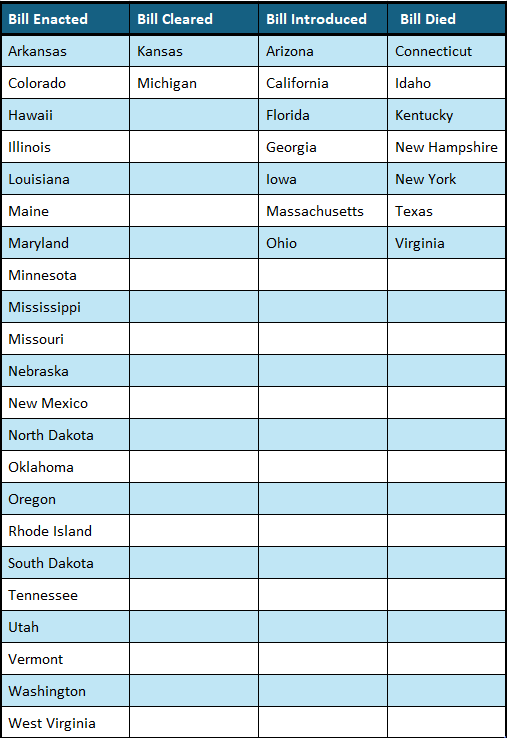
Current Status on State Bills and Laws that Prohibit Drugmaker 340B Contract Pharmacy Restrictions
*States in Bold are the newest updates.
340B Oversight, Data, and Documentation are Converging
September’s updates point to one clear theme: covered entities are being asked to manage more data, from more sources, with higher operational stakes.
CMS is preparing to launch its Medicare Part D 340B Repository on October 1. HRSA’s rebate model pilot is moving toward possible January 1 implementation, with covered entity notices potentially approaching in early October. Manufacturers continue updating claims data requirements, contract pharmacy restrictions, and state exemptions.
Data Requests Are Coming From Multiple Directions
Claims data is now tied to CMS reporting, HRSA’s rebate pilot, manufacturer policies, contract pharmacy access, in-house pharmacy requirements, and state law exemptions.
For covered entities, the question is no longer just, “Can we pull the data?” It is also:
Who is requesting it?
Is submission voluntary, required, or tied to pricing access?
Who receives the data?
What systems does the data come from?
Who reviews it before submission?
What happens if it is delayed, incomplete, or disputed?
Vendor and TPA Ownership Needs to Be Clear
Many covered entities will rely on TPAs, pharmacy partners, split-billing vendors, billing teams, or IT support to identify and submit data. That makes ownership critical.
Covered entities should know which vendors can support CMS repository submissions, which vendors are preparing for potential rebate model requirements, and which manufacturer policies require action through platforms such as 340B ESP.
Without clear ownership, data requests can quickly become scattered across pharmacy, compliance, finance, IT, billing, and vendor teams.
What This Means for CEs
Covered entities should start treating data request management as a core part of 340B oversight. The goal is not to submit every piece of data automatically. The goal is to create a process for evaluating each request, determining whether it applies, assigning ownership, documenting decisions, and tracking outcomes.
As 340B becomes more data-driven, clear internal processes will be essential to protecting compliance, pricing access, cash flow, and patient care resources.
For more on how claims data, federal policy, manufacturer requirements, and documentation are increasingly intersecting in day-to-day 340B operations, read ACI Monthly – August 2026 and Manufacturer Trend: All-Claims Submissions for 340B Purchases.