

This Month at a Glance:
- AbbVie patient definition lawsuit raises broader eligibility questions. Provider groups are moving to intervene in AbbVie’s challenge to HRSA’s 1996 patient definition, warning that a narrower standard could reduce 340B savings and disrupt care.
- SECURE 340B Act enters the reform debate. The bipartisan House bill would pause manufacturer rebates, define “patient,” and set contract pharmacy standards, drawing mixed reactions from 340B stakeholders.
- CMS proposes major Part B cuts for 340B drugs. The CY 2027 OPPS proposed rule would cut reimbursement for 340B-acquired drugs from ASP plus 6% to ASP minus 33.4%, effective January 1, 2027.
- Manufacturer claims data enforcement escalates. Eli Lilly’s enforcement action prompted the first covered entity lawsuit over lost 340B pricing, while Novartis became the latest manufacturer to announce in-house pharmacy claims data requirements.
- Manufacturer data requirements continue shifting. Recent policy updates from Sanofi, GSK, Sobi, Boehringer Ingelheim, and Novartis show continued variation in effective dates, state exemptions, required data fields, and pharmacy channel scope.
- Pressure is mounting from every direction. Covered entities now face patient definition litigation, rebate activity, Medicare payment proposals, manufacturer restrictions, data demands, and state law uncertainty all at once.
AbbVie Patient Definition Lawsuit Raises Stakes for 340B Eligibility
AbbVie’s challenge to HRSA’s 340B patient definition has become one of the most important 340B legal disputes to watch. The case targets HRSA’s longstanding 1996 patient definition guidance, which has shaped how covered entities determine whether a prescription is eligible for 340B pricing.
AbbVie filed suit in April, asking a federal court to strike down HRSA’s patient definition, arguing that the current standard enables program abuse and interferes with the manufacturer’s ability to audit covered entities. HRSA has asked the court to dismiss the lawsuit, describing AbbVie’s complaint as an attempt to upend the long-settled operation of the 340B program.
Provider Groups Seek to Intervene
Provider groups have moved to join the case to defend the current patient definition. 340B Health, UMass Memorial Medical Center, and Genesis HealthCare System filed a motion to intervene in June, arguing that hospitals are uniquely positioned to explain how a narrower patient definition would affect patient access, hospital operations, and care delivery.
NACHC and Ryan White Clinics for 340B Access also asked to intervene, arguing that the federal government alone cannot adequately represent the operational, financial, and patient-care interests of grantee covered entities. Their motion emphasized that health centers and Ryan White clinics rely on 340B savings to support care for medically underserved, uninsured, and low-income patients.
Why Patient Definition Matters Operationally
Patient definition is not an abstract legal question for covered entities. It affects which prescriptions qualify for 340B, how contract pharmacy claims are captured, how prescriptions are supported during audits, and how covered entities structure internal compliance processes.
A narrower patient definition could reduce eligible prescription volume, limit contract pharmacy savings, and create new uncertainty around prescriptions tied to referrals, outside prescribers, follow-up care, or specialty treatment pathways. It could also force covered entities to revisit policies, TPA logic, provider relationships, and documentation standards.
Existing Uncertainty Remains
The patient definition has already been under pressure. A South Carolina federal court rejected HRSA’s application of its patient definition in the Genesis case, creating uncertainty about how far HRSA’s 1996 guidance can reach. HRSA has continued to rely on its 1996 patient definition in audits, but AbbVie’s lawsuit could bring the issue back into sharper focus at a time when manufacturers are already challenging multiple areas of 340B program operations.
What This Means for CEs
Covered entities should not change their patient definition practices based on this lawsuit alone, but they should ensure current policies are clearly documented, consistently applied, and supported by strong records. Internal teams should review how prescriptions are tied to eligible providers, locations, patient records, referrals, and ongoing care relationships so they can defend program decisions under the current guidance or any future revised standard.
A case tracker is available through Georgetown Law for AbbVie Inc. v. Kennedy et al.
SECURE 340B Act Introduced as Reform Debate Expands
Congressional 340B reform activity intensified this period with the introduction of the SECURE 340B Act, a bipartisan House bill from Reps. Scott Peters and John Joyce. The bill is being described by its sponsors as a comprehensive effort to modernize the 340B program and provide more long-term certainty around several disputed areas.
For covered entities, the bill is important not only because of what it would do, but because it reflects how central 340B reform has become in the broader healthcare policy debate.
What the Bill Would Address
The SECURE 340B Act would touch several major areas of the program, including manufacturer rebate models, patient definition, contract pharmacy standards, and transparency requirements. Supporters argue that the bill could create clearer rules and reduce uncertainty in areas that have been left to guidance, litigation, or manufacturer policy changes.
One key component is a proposed pause on manufacturer rebate models, paired with study or evaluation of a neutral clearinghouse approach. The bill also attempts to define 340B patient eligibility and establish standards for contract pharmacy use.
Mixed Stakeholder Reaction
Stakeholder reaction has been split. Some health center groups and other organizations praised the bill’s bipartisan approach, particularly provisions related to delaying rebates and evaluating a clearinghouse before moving toward a rebate structure.
Hospital groups have been more cautious. Some provider advocates argue the bill could impose burdensome requirements on hospitals while giving too much ground to pharmaceutical manufacturers. Concerns include how patient definition language could affect current eligibility practices, whether new reporting standards would increase administrative burden, and how contract pharmacy provisions could affect existing arrangements.
Why Hospitals Are Watching Closely
For hospitals, the bill could affect several core areas of 340B operations at once. Contract pharmacy access, patient definition, reporting requirements, and rebate model protections all tie directly to savings, compliance workflows, and program oversight. Even if the bill does not advance quickly, it signals the direction of congressional debate.
What This Means for CEs
Covered entities should monitor the SECURE 340B Act closely but should avoid treating it as settled policy. The bill is one proposal in a crowded reform environment that also includes the SUSTAIN 340B Act, the 340B ACCESS Act, rebate model activity, and ongoing state law disputes. CEs should pay close attention to any proposed patient definition language, contract pharmacy standards, reporting requirements, and rebate provisions. These areas would directly affect day-to-day program operations if enacted.
For more information, Rep. Scott Peters’ office has published an overview of the SECURE 340B Act.
CMS Medicare Part B Proposal Adds New Financial Pressure
CMS added another major pressure point for 340B hospitals this period with its CY 2027 Hospital Outpatient Prospective Payment System proposed rule. The proposal would reduce Medicare Part B reimbursement for 340B-acquired outpatient drugs from ASP plus 6% to ASP minus 33.4% beginning January 1, 2027.
CMS stated that the proposed change is intended to better align Medicare payments with hospital acquisition costs for 340B drugs. Hospital groups strongly oppose the proposal, arguing that the reduction would divert resources away from safety-net hospitals and reduce funds used to support care for vulnerable patients.
A Return to 340B Payment Cuts
This is not the first time CMS has attempted to reduce Medicare reimbursement for 340B hospitals. During the first Trump administration, CMS cut Part B payments for 340B-acquired drugs, but the U.S. Supreme Court unanimously overturned those cuts because CMS had not conducted the required hospital acquisition cost survey before implementing the policy.
CMS has since conducted a survey of hospital drug acquisition costs and is now using that survey to support the new proposed payment rate. The agency is also proposing to implement the policy in a budget-neutral manner, meaning the 340B drug payment reductions would be offset by increases to certain non-drug OPPS payments.
Financial Impact for Hospitals
For hospitals that rely on Medicare outpatient drug reimbursement, the proposed cut could be significant. A reduction from ASP plus 6% to ASP minus 33.4% would materially reduce margin on affected 340B-acquired drugs and could change the financial assumptions behind outpatient drug programs, infusion services, oncology care, specialty pharmacy strategies, and other hospital-based services.
The proposal also comes at a time when hospitals are already facing manufacturer restrictions, claims data requirements, rebate model uncertainty, and state-level reimbursement pressure. Even if the CMS proposal is still only proposed, hospitals should begin modeling exposure now.
Operational Questions to Consider
The proposal raises several practical questions for covered entities:
- Which outpatient drugs currently generate meaningful Medicare Part B savings?
- Which service lines rely most heavily on those savings?
- How would reduced reimbursement affect patient services or program support?
- How would the proposal interact with Medicare negotiated drugs and potential rebate model activity?
- What internal teams need to be involved in modeling the impact?
What This Means for CEs
Covered entities should review the proposed rule and model financial exposure by drug, department, and service line before the comment deadline. CMS frames the reduction as a payment alignment issue, but for CEs, the key question is what services, staffing, access points, or patient supports could be affected if reimbursement is reduced. Hospitals should involve finance, pharmacy, compliance, government relations, and leadership early so the potential impact is understood and clearly communicated.
CMS has published a fact sheet on the proposed rule here: CY 2027 OPPS/ASC Proposed Rule.
Claims Data Enforcement Moves from Policy Threat to Pricing Risk
Manufacturer in-house claims data requirements have been building for months, but the issue has now moved from policy tracking to active pricing risk. In June, Eli Lilly became the first manufacturer to cut off 340B pricing for certain hospitals that did not comply with its in-house pharmacy claims data reporting requirements. Since then, Tampa General Hospital has sued Lilly, and Novo Nordisk has warned certain covered entities that they could also lose access to 340B pricing if they do not comply with its in-house claims data policy.
This shift matters because covered entities are no longer only evaluating whether a manufacturer policy applies. They are now weighing the operational burden of submission against the financial risk of losing 340B pricing access.
Lilly Enforcement Creates First Major Test
Lilly’s enforcement action marks a significant escalation. The manufacturer previously warned covered entities that failure to submit required claims data could result in loss of 340B pricing, and hospital groups later confirmed Lilly had cut off pricing for certain hospitals that did not comply.
Tampa General later sued Lilly, alleging the manufacturer unlawfully denied 340B pricing after the hospital refused to submit in-house pharmacy data. The hospital estimated the action could cost approximately $24.7 million annually. Lilly has defended its policy as lawful and necessary for program integrity, while provider groups argue these requirements place new conditions on 340B access not authorized under the statute.
Other Manufacturers Are Watching
Lilly may be the first manufacturer to enforce its policy by cutting off pricing, but it is not the only manufacturer using pricing access as leverage. Novo Nordisk recently warned certain covered entities that failure to submit claims data through 340B ESP could result in loss of 340B pricing. At the same time, Boehringer Ingelheim and Novartis joined the growing list of manufacturers with in-house pharmacy claims data requirements.
Why This Is Operationally Different
Covered entities are now managing a patchwork of manufacturer-specific rules, effective dates, state exemptions, product lists, required data elements, and submission processes. What began as an emerging policy issue has become an immediate operational and financial concern for pharmacy, compliance, finance, revenue integrity, IT, and legal teams.
These teams may need to determine whether a policy applies, whether the entity has the required data, whether state law provides protection, whether submission is operationally possible, and what financial exposure exists if pricing is suspended.
What This Means for CEs
Covered entities should treat manufacturers claims data requirements as a pricing access risk, not just a reporting task. Internal teams should maintain a current tracker that identifies each manufacturer policy, effective date, impacted products, required data fields, submission deadline, state exemptions, enforcement status, and vendor pathway. CEs should also document decision-making carefully. Whether an entity submits data, delays submission, seeks legal review, or challenges a policy, the rationale should be clear and supported.
Claims Data Update: Sanofi, GSK, Sobi, Boehringer Ingelheim, and Novartis
Manufacturer in-house pharmacy claims data requirements continued to expand this period, with several policies taking effect in quick succession. Sanofi’s policy took effect June 15, followed by GSK and Sobi on July 1, and Boehringer Ingelheim and Novartis on July 6. While these policies are part of the same broader trend, the details vary by manufacturer, including impacted products, required data fields, medical claims requirements, entity type, pharmacy channel, and state exemptions.
Recent manufacturer updates include:
- Sanofi: Effective June 15
- GSK: Effective July 1
- Sobi: Effective July 1
- Novartis: Effective July 6
- Boehringer Ingelheim: Effective July 6
GSK and Sobi require claims-level data for affected 340B dispenses, including in-house pharmacy utilization. Boehringer Ingelheim requires pharmacy and medical claims data for in-house pharmacy utilization within 45 days of dispensing and applies exemptions “where applicable by state law.” Novartis also announced in-house pharmacy claims data requirements, with exemptions listed for several states. Covered entities should review each policy individually before submitting data or relying on an exemption, as state carveouts and requirements continue to differ across manufacturers.
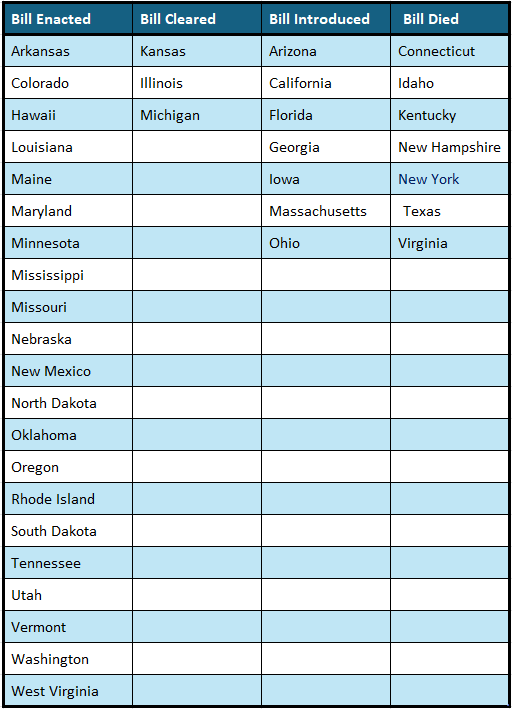
Current Status on State Bills and Laws that Prohibit Drugmaker 340B Contract Pharmacy Restrictions
*States in Bold are the newest updates since last update
340B Pressure Builds: Litigation, Policy, and Daily Program Operations
The 340B program is entering one of its most complex periods in recent memory. Covered entities are managing multiple pressure points at once: patient definition litigation, manufacturer data requirements, contract pharmacy restrictions, Medicare payment proposals, state law changes, rebate model activity, and federal reform bills.
For hospitals, health centers, and other covered entities, these issues are not theoretical. Each one can affect savings, drug access, compliance documentation, staffing capacity, vendor workflows, and patient services.
Pressure Is Coming from Multiple Directions
Manufacturers are pressing for more claims data, tighter oversight, and narrower interpretations of eligibility. CMS is proposing reduced Medicare Part B reimbursement for 340B-acquired drugs, HRSA is advancing a possible rebate model, and Congress is considering reform proposals that could affect rebates, contract pharmacies, patient definition, and transparency requirements.
States are also moving in different directions. Some are strengthening contract pharmacy and data protection laws, while others are exploring reimbursement changes, reporting requirements, or broader drug affordability policies that could affect 340B savings.
Internal Teams are Carrying the Burden
The operational burden falls heavily on 340B teams, pharmacy leaders, finance, compliance, and revenue integrity. These teams are being asked to monitor manufacturer notices, track exemptions, update policies, respond to data requests, review contract pharmacy performance, prepare for audits, model reimbursement changes, and explain program impact to leadership.
The pace of change makes it difficult to treat 340B as a routine maintenance function, especially when many internal teams are also responsible for other hospital or clinic priorities.
What This Means for CEs
Covered entities should prioritize visibility, documentation, and consistency. That includes maintaining current trackers for manufacturer policies, claims data requirements, contract pharmacy restrictions, state law protections, rebate activity, and federal proposals.
The 340B landscape is becoming more fragmented, data-driven, and contested. For CEs, the goal is not only to react to each update, but to build a program management process that can absorb constant change while protecting compliance, savings, and patient access.
ACI is here to help.
As the 340B landscape becomes more complex, covered entities need clear tracking, strong documentation, and reliable support. ACI 340B Management helps covered entities stay organized, compliant, and prepared as program requirements continue to evolve.
Have questions or need support? Contact our team here.